
The Why, Not The What
We need a new rallying point in 2026: but no-one is asking the right questions…

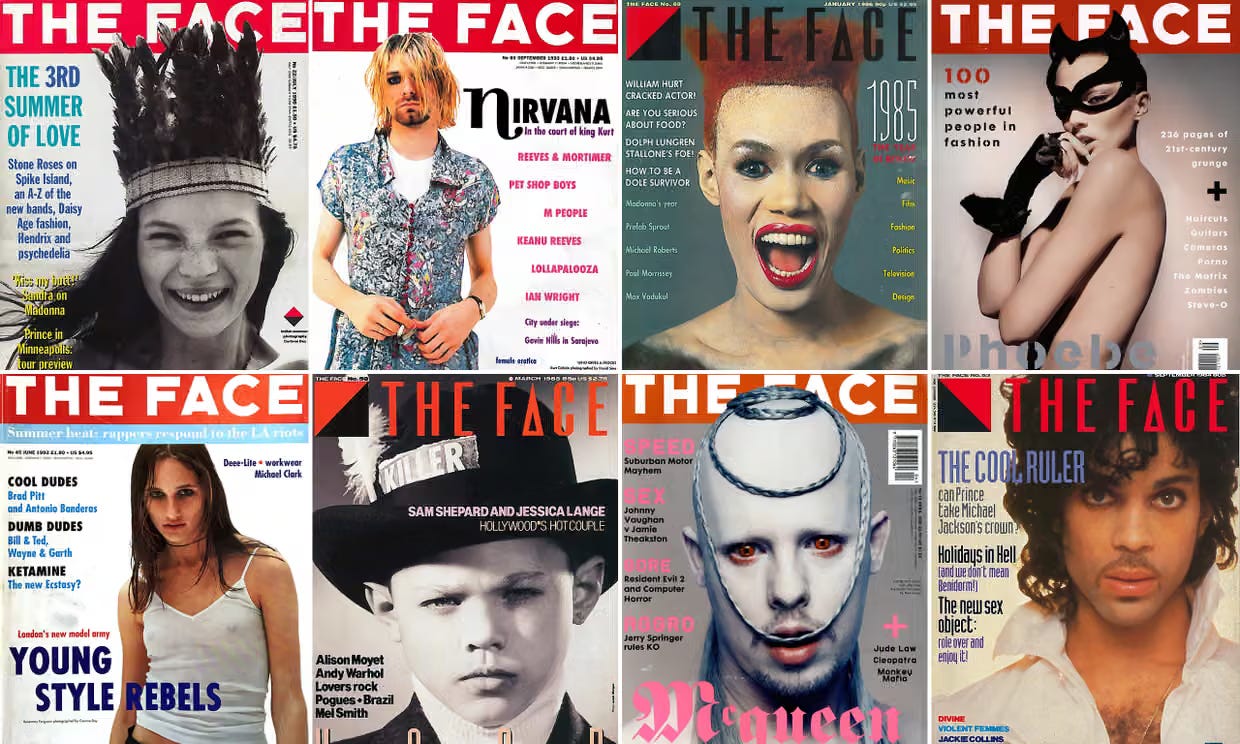
With the exception of Smash Hits in its Neil Tennant era, The Face was the only magazine I ever wanted to work for. And since Neil Tennant was already firmly established as a pop star by the time I was of employable age, there was really only one option available to me. That might seem simplistic, but the strange thing is, I never had any doubt I’d write for The Face.
If I was trying to sugarcoat things for my LinkedIn profile, I could say I developed a foolproof five-year strategy, visualising myself in the position where I wanted to be, and reverse engineering my circumstances so that I turned up at the right time, at the right place. The truth is far more prosaic. I didn’t study journalism. I didn’t even write for my student newspaper. (I did go to one meeting in my first term, but they struck me as pompous and self-important, with a seemingly impenetrable hierarchy that certainly didn’t offer much in the way of encouragement for innocent freshers.) But when people asked me what I was going to do with my Philosophy degree in the real world, I already knew the answer: I was going to write for The Face.
When I finally got a job there, I felt like I had met my people. They remain the most talented bunch I have ever worked with. Outsiders often dismissed it as a ‘trendy’ magazine, obsessed with surface over substance. In truth it was anything but.
Look beyond that glossy cover and you saw that these were enquiring minds, who understood the importance of culture. The approach was best summed up by Richard Benson, who edited The Face when I worked there in the 90s: ‘It’s about the “why”, not the “what”.’
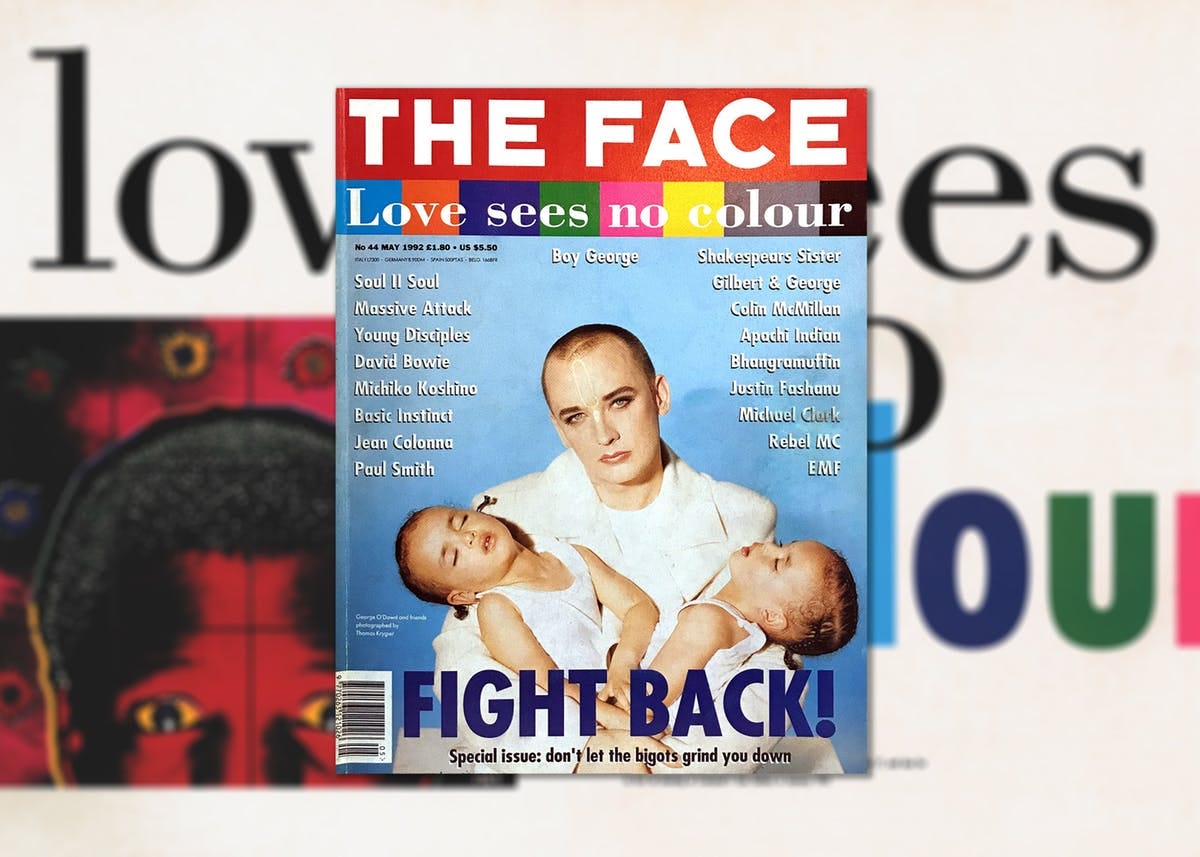
Years later, when The Face magazine was relaunched by Jerry Perkins of Wasted Talent, I was employed as a consultant by Managing Director Dan Flower. It was a dream, full circle moment – not least because I got the chance to interview the magazine’s founder, Nick Logan, for it – ostensibly to talk about the ‘Love Sees No Colour’ issue (May 1992) for their archive section [https://theface.com/culture/love-sees-no-colour).
Nick chose to talk about this particular issue - edited then by Sheryl Garratt – because it offered an opportunity to spell out his vision and his ethos for the magazine he founded. Having previously edited the NME and launched Smash Hits, he wanted to reflect a pop cultural landscape that was becoming increasingly politicised in 1980. The far right was on the rise. Racism and division was rife. A rich elite was pitting workers against each other while they creamed off the profits for themselves. Everything had a price: nothing, seemingly, had a value.
Sound familiar?
Nick’s first choice of cover star was a telling one: Jerry Stammers of The Specials: the ‘Face’ of a new generation that refused to be fobbed off with the old lies: the embodiment of a modern, ‘2-Tone’ mixed, United Kingdom. His band broke down the old barriers between artist and audience - literally as well as metaphorically.
The ‘Love Sees No Colour Issue’ was released 12 years later, in the wake of a series of racist murders in the Midlands and London. I remember being struck by it at the time - how they had gathered together these icons of popular culture (Bowie and Iman, for goodness’ sake!) to show the power of unity and love.
When I got the chance to speak to Nick, I told him that this issue made me realise that a magazine could be so much more than many of the alternatives on the newsstand.
‘Oh absolutely, yes, it was: the idea of a magazine that can be a rallying point,’ he said. ‘The Face was about forming a network, pre-Facebook… I think we need something like that again.’
I’ve been thinking about that conversation a lot recently. Where is the equivalent today? Where is the headline shouting, ‘FIGHT BACK!’? Who is telling their readers (or followers), ‘Don’t let the bigots grind you down’?
All we are left with are the cowed and the sycophantic. ‘Influencers’ with a platform that they use for nothing but their own self aggrandisement. Of course, it’s a reflection of the times we’re living in. But that’s no excuse.
It’s still all about the “why”, not the “what”. Journalism in 2026 - like much of society - is floundering because it is failing to ask the most basic of questions… or to question at all. What is happening is never the full story. It’s the why that matters most. Step back from your feed of unrelenting news headlines, of instant reaction and knee-jerk opinion.
Ask why.
Why are zombie movies trending again on Netflix? Why are people frustrated with party politics? Why are you relying on ChatGPT for answers? Why does Trump want Greenland?
It all connects, if you bother to look.
People might complain that AI is making us all dumber, but that’s an easy get-out. I’ve got nothing against AI per se. It gives you the “what” every time. But it never asks “why”. That’s our job.
Why we're all so taken with the 'good old days' of mags, and everything else. Great piece Hoops!
Being featured in The Face (Sheyl G did a piece about the arts magazine I launched in Spain) is still a career highlight. It's been downhill ever since!